3 hr
Marrakech Street Food Walk with Local Guide
Discover hidden culinary gems across Marrakech's residential quarters with an insider who knows where locals actually eat.
Reserve
Hand-picked by our editors — only the best 5 experiences from 22 reviewed.
Verified partners for every tour, free cancellation where available, and instant confirmation on every booking.
3 hr
Discover hidden culinary gems across Marrakech's residential quarters with an insider who knows where locals actually eat.
Reserve
3 hr
Discover Marrakech's culinary soul through night markets, hidden eateries, and rooftop mint tea
Reserve
4 hr
A four-hour culinary journey through Marrakech's labyrinthine old quarter with a local guide
ReservePrices from verified partners. Availability updates in real time at checkout. Free cancellation policies apply where shown.
The landmarks, rooms, and views travelers on this tour remember — all visible on a single visit.
The minaret provides a stunning backdrop for evening food stalls in Jemaa el-Fna. It dates back to the 12th century.
Famous for slow-roasted lamb prepared in underground pits, best visited before stalls sell out.
The main artery of the market, filled with textiles and spices leading to the square.
The main nightly hub with over 100 stalls serving everything from harira to grilled meats.
A classic meeting point on the square known for its terrace views of the sunset.
Guided experiences offer deep culinary context for those seeking structured learning, while independent Jemaa el-Fna market visits provide total spontaneity for adventurous diners. Most travelers find the marrakech street food tour with a local guide tours more reassuring for navigating complex menus.
| Feature | Top pick Guided Food Tour | Independent Stalls |
|---|---|---|
Cultural insight |
Deep narrative and history | Limited to personal observation |
Logistical ease |
Organized and pre-planned | Requires self-navigation |
Flexibility |
Fixed schedule and route | High personal spontaneity |
Cost |
Includes professional fees | 0 MAD entry fee |
Safety and hygiene awareness |
Proactive stall vetting | Personal vigilance required |
Language barrier support |
Full translation assistance | Relies on basic communication |
| See tickets → |
Verdict: Choose a marrakech street food tour with a local guide tour if you prioritize safety and deep cultural context, or opt for independent exploration if you prefer to set your own pace at Jemaa el-Fna.
Choose your ticket, select your date, and reserve in under two minutes. Secure checkout handled by our verified partner.
Instant confirmation by email, with a mobile voucher you can save offline. No printing, no queuing at a collection desk.
Arrive at the entrance, show your voucher on your phone, and walk in. Most tickets include priority or skip-the-line access.
Practical details for your visit straight from our verified partners — hours, access, rules, and how to get there.
Modest dress is recommended when exploring the Medina and visiting Jemaa el-Fna. Comfortable, supportive footwear is essential for walking on uneven market terrain.
Keep belongings secure and zipped in crowded areas to deter pickpockets. Small cross-body bags are preferable to bulky backpacks for navigating narrow alleys.
Always ask permission before photographing performers or vendors to avoid disputes. Respect local privacy by avoiding close-ups of individuals without consent.
The Medina is historic with uneven paths and high crowd density. Many street food tour routes involve significant walking through crowded markets.
Children are welcome on many tours, though the noise and bustle can be intense. Families should ensure children stay close in busy sections.
Follow your local guide's recommendations to ensure fresh, high-turnover stalls. Stick to bottled water and avoid ice cubes in drinks.
Best time to go, insider tips, nearby landmarks, and the cancellation fine print — flip through to skim what matters to you.
Flexible, no hidden fees.
Full refunds are typically available for cancellations made within the operator's specified window, often 24 hours prior. Access to the public Medina is free (0 MAD).
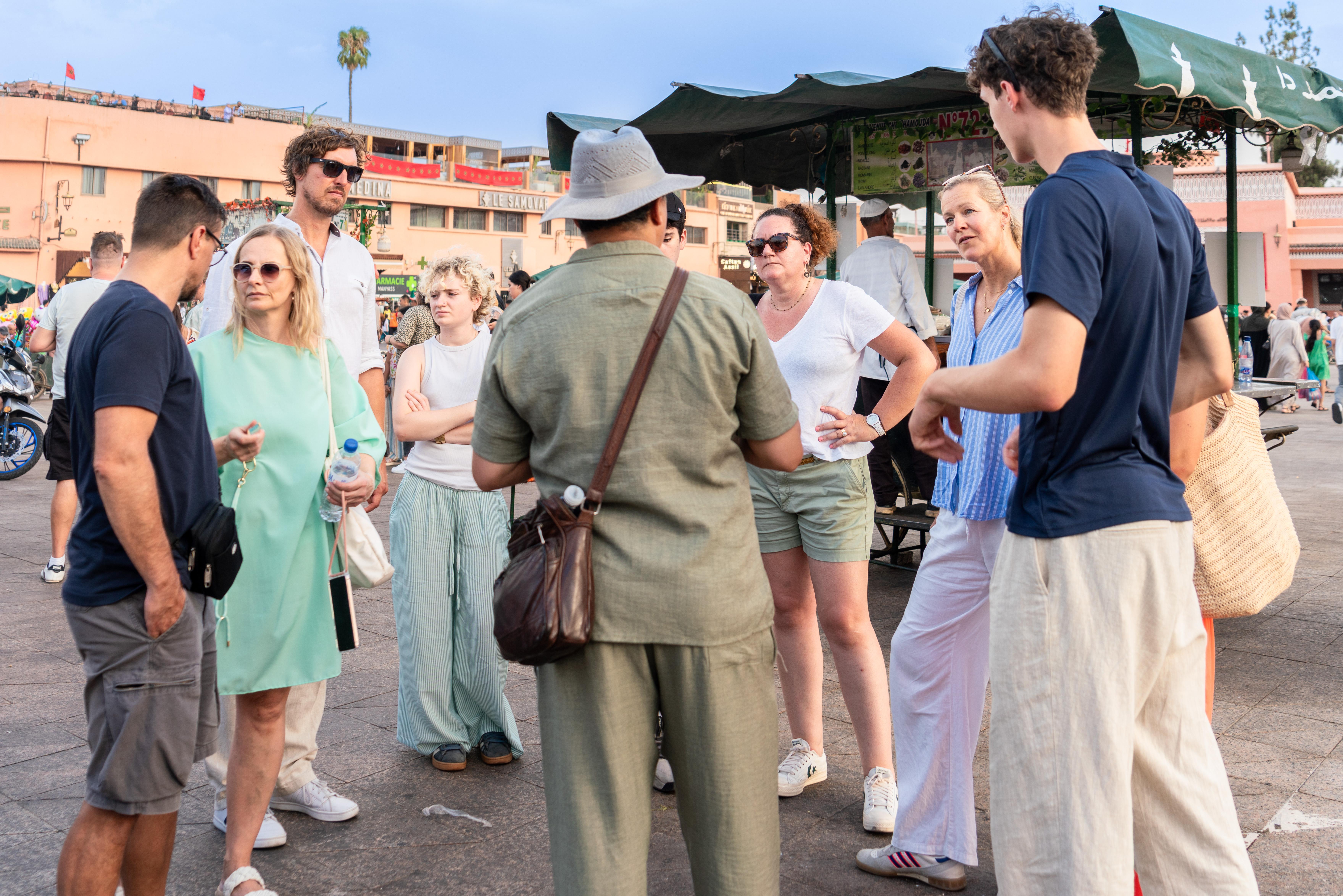
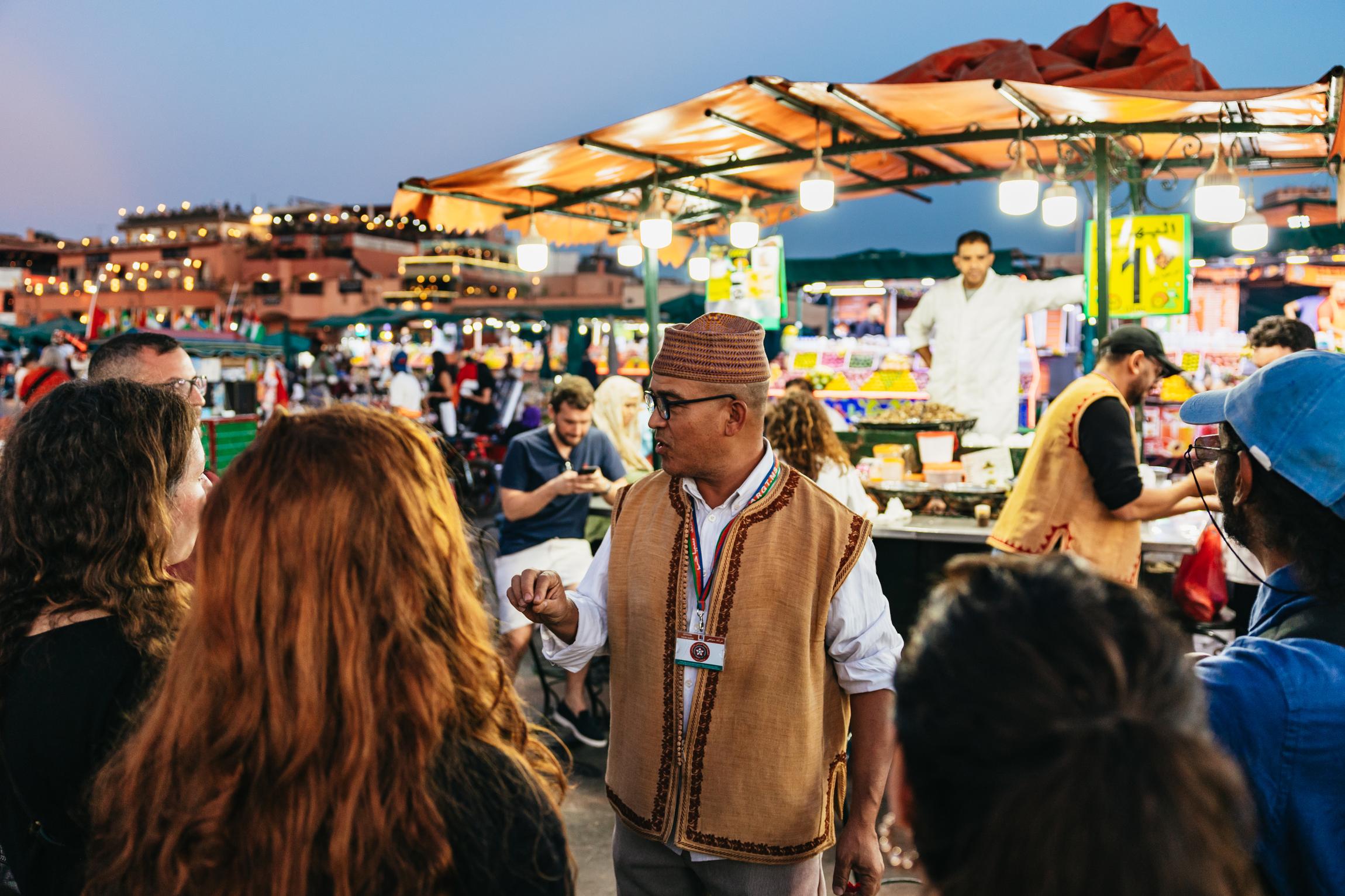
Jemaa el-Fna has served as Marrakesh's open-air dining hall for eight centuries, a UNESCO-recognised square where smoke from charcoal grills rises into the Atlas twilight and the scent of cumin, coriander, and preserved lemon hangs thick over a hundred vendor stalls. By day, the plaza belongs to orange-juice carts and water sellers; by nightfall, it transforms into the largest street-food bazaar in North Africa, drawing locals and visitors alike to tables lit by kerosene lamps and lined with tagines, merguez sausages, snail broth, and sheep's head halves steaming under muslin cloth. A marrakech street food tour with a local guide navigates this sensory labyrinth with precision, steering you past tourist-facing stalls toward the carts and benches where Marrakchis themselves queue for dinner. Your guide decodes the hand signals vendors use to negotiate prices, explains why harira is ladled thicker in winter, and identifies the difference between maakouda made with potato and those cut with fava bean. You taste msemen drizzled with honey and argan oil, bissara served in clay bowls, and briwat pastries fried to order, each stop chosen not for spectacle but for the integrity of the recipe and the reputation of the cook. Beyond Jemaa el-Fna, the tour threads into the northern Medina, where alleyways narrow to shoulder-width and the lighting dims to single bulbs strung above doorways. Here, family-run stalls serve dishes rarely advertised: tangia slow-cooked in amphora jars buried in hammam embers, khobz dough pressed against the walls of communal ovens, and mint tea poured from height into glasses stained amber by years of use. These are the places locals protect from guidebooks, revealed only through introduction. The medina food walk operates year-round, adapting to Ramadan schedules when iftar stalls open at sunset and to summer months when lighter dishes—cold salads, chilled almond milk, seasonal fruit—dominate the offerings. Guides are native Marrakchis, many second-generation vendors themselves, who grew up bargaining in Darija and know which spice merchant grinds his ras el hanout daily and which olive curer still uses the stone vats his grandfather installed in 1947. The experience is not a performance but an invitation into the city's nocturnal economy, where the transaction is as much social ritual as commerce and every plate carries the weight of inherited technique.

"By nightfall, Jemaa el-Fna transforms into the largest street-food bazaar in North Africa, where every plate carries the weight of inherited technique."
A step-by-step walkthrough of the visit — what you'll see, how long each stage takes, and the details that matter.
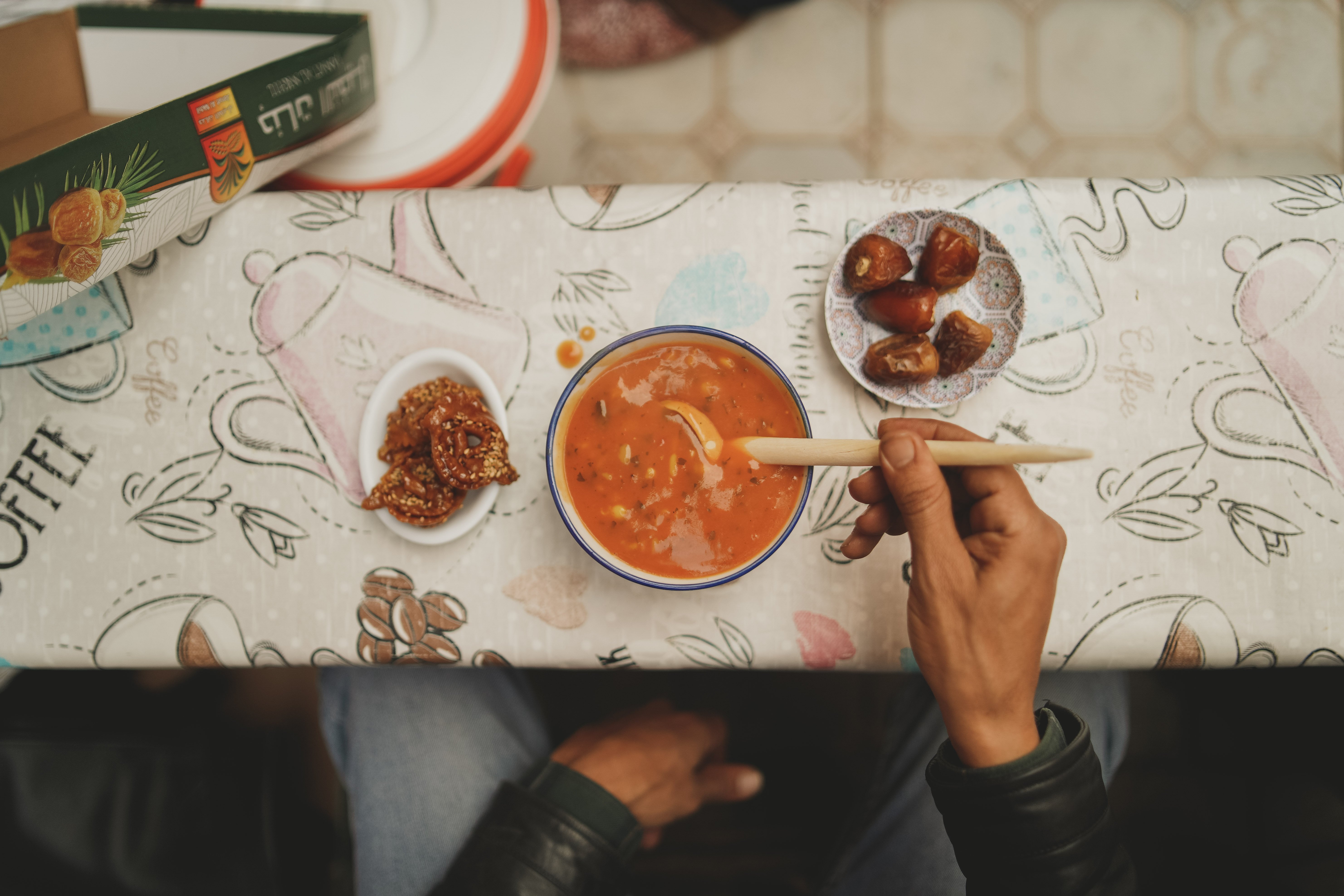
You meet your guide at the northwest corner of Jemaa el-Fna as the call to Maghrib prayer echoes from the Koutoubia minaret and the first charcoal fires are lit across the square. The evening begins at a harira stall where your guide orders two bowls of the tomato-lentil soup Moroccans break their fast with, the surface slick with olive oil and scattered with fresh coriander. You eat standing, the way locals do, then move to a grill station where merguez sausages spit fat onto the coals and are served in quarters of khobz with a side of pickled vegetables. The route weaves north into the Medina, pausing at a maakouda cart where the vendor fries potato cakes to order and stacks them in paper cones, then at a snail-broth vendor who ladles the gray liquid—spiked with caraway, thyme, and licorice root—into shallow bowls you sip from the rim. Your guide explains the medicinal properties locals attribute to each ingredient, then leads you deeper into the souks to a stall selling chebakia, honey-soaked sesame pastries shaped into rosettes, and finally to a rooftop café where you drink mint tea overlooking the square, now a grid of lights and rising smoke, the Atlas range darkening beyond the palms.
Yes, tours are generally safe when led by a knowledgeable guide who knows the best, high-turnover stalls. The best time for a marrakech street food tour with a local guide is between 18:00–22:00 when the square is most active. Entrance to the public square is 0 MAD. You can book your marrakech street food tour with a local guide via authorized online platforms or travel agencies. Expect a fair amount of walking, as these are typically walking tours of the Medina. Yes, families can enjoy a marrakech street food tour with a local guide, provided children are comfortable with crowds. Bring comfortable shoes and small change. Guides ensure you eat at vetted stalls with high turnover. Yes, these tours operate daily, typically in the evening.
Please contact us for more information.